How We Help
Treatments & Interventions
In addition to traditional occupational therapy, biofeedback, and neurofeedback, Dr. Amanda utilizes a variety of carefully selected treatment methods. Each intervention is chosen to address your or your child's specific needs.
Treatment Modality
Biofeedback & Neurofeedback
Biofeedback
Evidence-based techniques that teach individuals how to gain awareness and control over physiological processes using non-invasive sensors providing real-time information about muscle activity (EMG), skin conductance (GSR), temperature, breathing patterns, and heart rate variability (HRV).
Neurofeedback
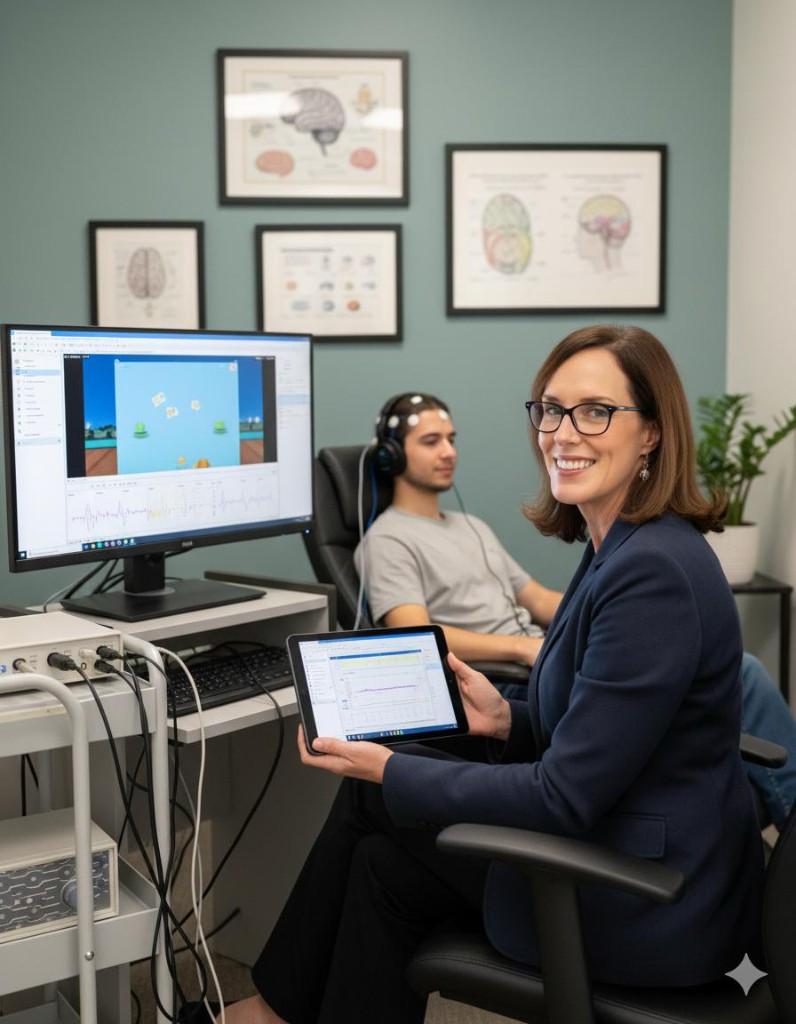
A specialized type of biofeedback that helps individuals train their brain's electrical activity for improved regulation and performance. We utilize amplitude training and infralow neurofeedback to support network-level regulation and stabilization of the nervous system.
Heart Rate Variability Biofeedback (HRVB)
Trains individuals to regulate heart rhythm patterns to improve emotional balance, stress resilience, and overall health. By learning to breathe at an optimal resonance frequency, clients increase vagal tone and support healthy brain-body communication.
Questions about Biofeedback & Neurofeedback?
Schedule a free 15-minute consultation to learn how these interventions might help you.
Book Free ConsultIntervention
Neurostimulation
Audiovisual Entrainment (AVE)
Uses rhythmic flashes of light and pulses of sound to gently guide the brain into specific brainwave patterns. AVE promotes relaxation, improves focus, enhances mood, and supports restorative brain states.
PEMF Therapy
Pulsed Electromagnetic Field (PEMF) therapy uses low-frequency electromagnetic fields to gently stimulate cellular function. Non-invasive and painless, it promotes circulation, reduces inflammation, and supports neurological and systemic recovery.
tDCS & tACS
Transcranial Direct Current Stimulation delivers a low-level direct current to modulate cortical excitability and support attention, mood, and cognitive performance. tACS uses rhythmic alternating currents to gently entrain brain oscillations.
Dolphin Neurostim® (MPS)
Microcurrent Point Stimulation applies low-frequency electrical current to specific acupuncture and trigger points. This targeted stimulation calms the nervous system, releases muscle tension, reduces pain, and promotes natural healing.
Treatment Modality
Sensory, Motor & Sound Therapies
Sensory Integration Therapy
Structured, individualized activities that support the nervous system in processing sensory input more effectively — improving comfort, focus, and participation in school, work, and daily life.
Interactive Metronome (IM)
A computer-based training program that improves timing, rhythm, and synchronization in the brain and body. IM strengthens focus, working memory, processing speed, coordination, and self-regulation.
Sound Therapies
Evidence-based auditory interventions including the Safe and Sound Protocol (SSP), Therapeutic Listening®, and Integrated Listening Systems (iLS) — using specifically designed music and sound patterns to influence the brain and nervous system.

Questions about Sensory, Motor & Sound Therapies?
Schedule a free 15-minute consultation to learn how these interventions might help you.
Book Free ConsultIntervention
Psychotherapy-Informed Approaches
Acceptance and Commitment Therapy (ACT)
Builds psychological flexibility — the ability to stay present, accept difficult thoughts and feelings, and take meaningful action aligned with personal values. Integrates mindfulness with behavior change strategies.
Cognitive Behavioral Therapy (CBT)
Helps individuals understand the connection between thoughts, emotions, and behaviors. CBT identifies unhelpful thinking patterns and builds healthier coping strategies for anxiety, depression, ADHD, trauma, and more.
Zones of Regulation®
A widely used framework using four color-coded zones to teach self-awareness and self-regulation. Combined with sensory integration, biofeedback, and executive function training for a comprehensive approach.
Rational Emotive Behavioral Therapy (REBT)
Helps individuals identify and change irrational beliefs that contribute to emotional distress. Highly effective for managing anxiety, depression, anger, stress, and self-defeating behaviors.

Treatment Modality
Skills Training
Executive Function Skills Training
Structured, evidence-based approach to improving planning, organization, time management, working memory, emotional regulation, and flexible thinking. Benefits children, teens, and adults with ADHD, ASD, learning disabilities, and more.
Social Thinking® Interventions
Evidence-based strategies that teach the 'why' behind social interactions — including perspective-taking, understanding hidden social rules, managing emotions, and problem-solving in real time.
Stress Management & Coping Skills
Structured training in relaxation techniques, mindfulness, breathing exercises, and cognitive-behavioral strategies. Can be combined with biofeedback and neurofeedback for real-time self-regulation of physiological responses.
Progressive Muscle Relaxation (PMR)
A research-supported relaxation technique that reduces tension and calms the nervous system by systematically tensing and relaxing different muscle groups. Increases body awareness and promotes deep physical and mental relaxation.
Handwriting Interventions
Structured programs including Handwriting Without Tears® and Loops and Other Groups to improve legibility, speed, and confidence. Integrated with fine motor strengthening, visual-motor coordination, and sensory processing strategies.

Questions about Skills Training?
Schedule a free 15-minute consultation to learn how these interventions might help you.
Book Free Consult